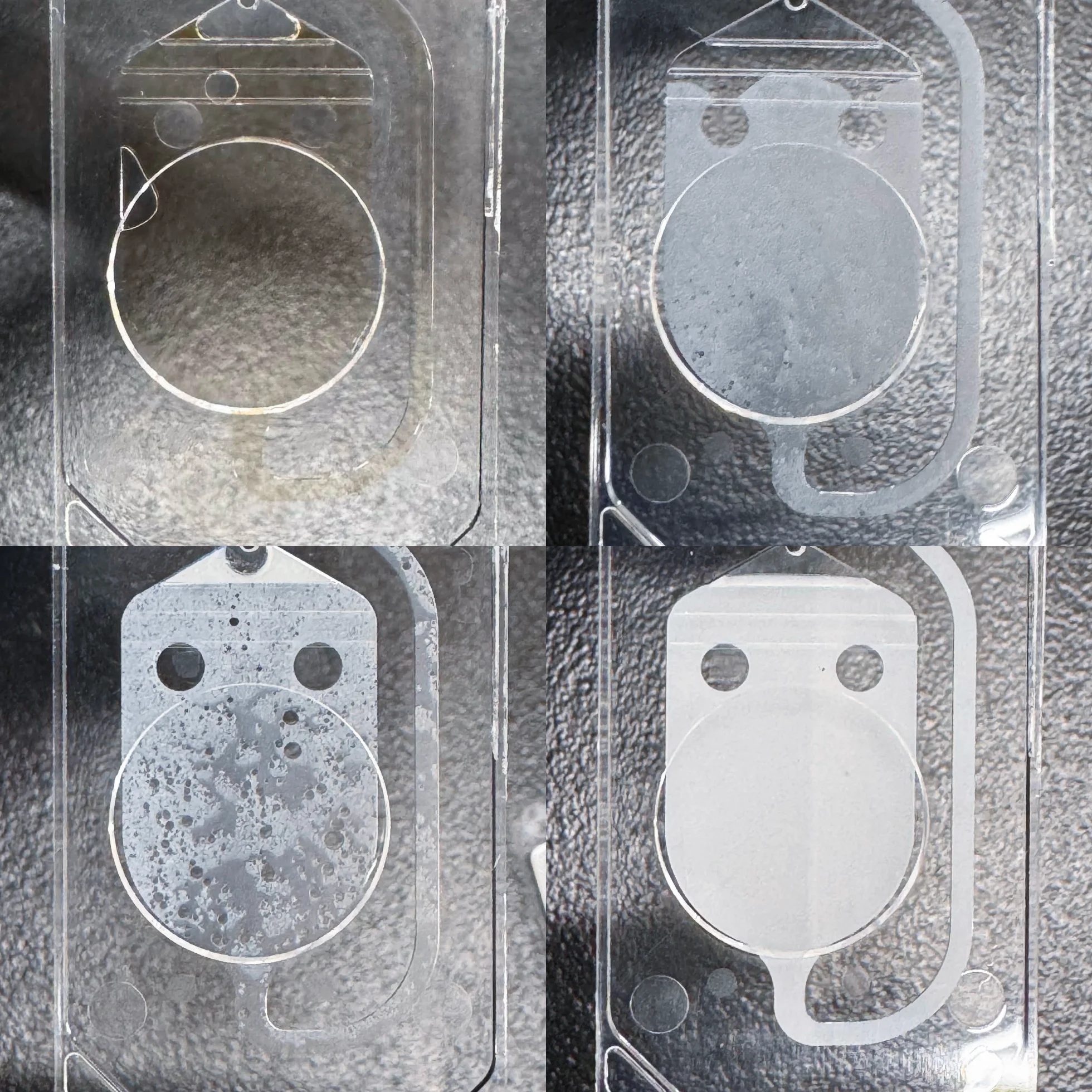
A 150 μm liquid layer opens new horizons in liquid observation.
A 150 μm liquid layer opens new horizons in liquid observation.
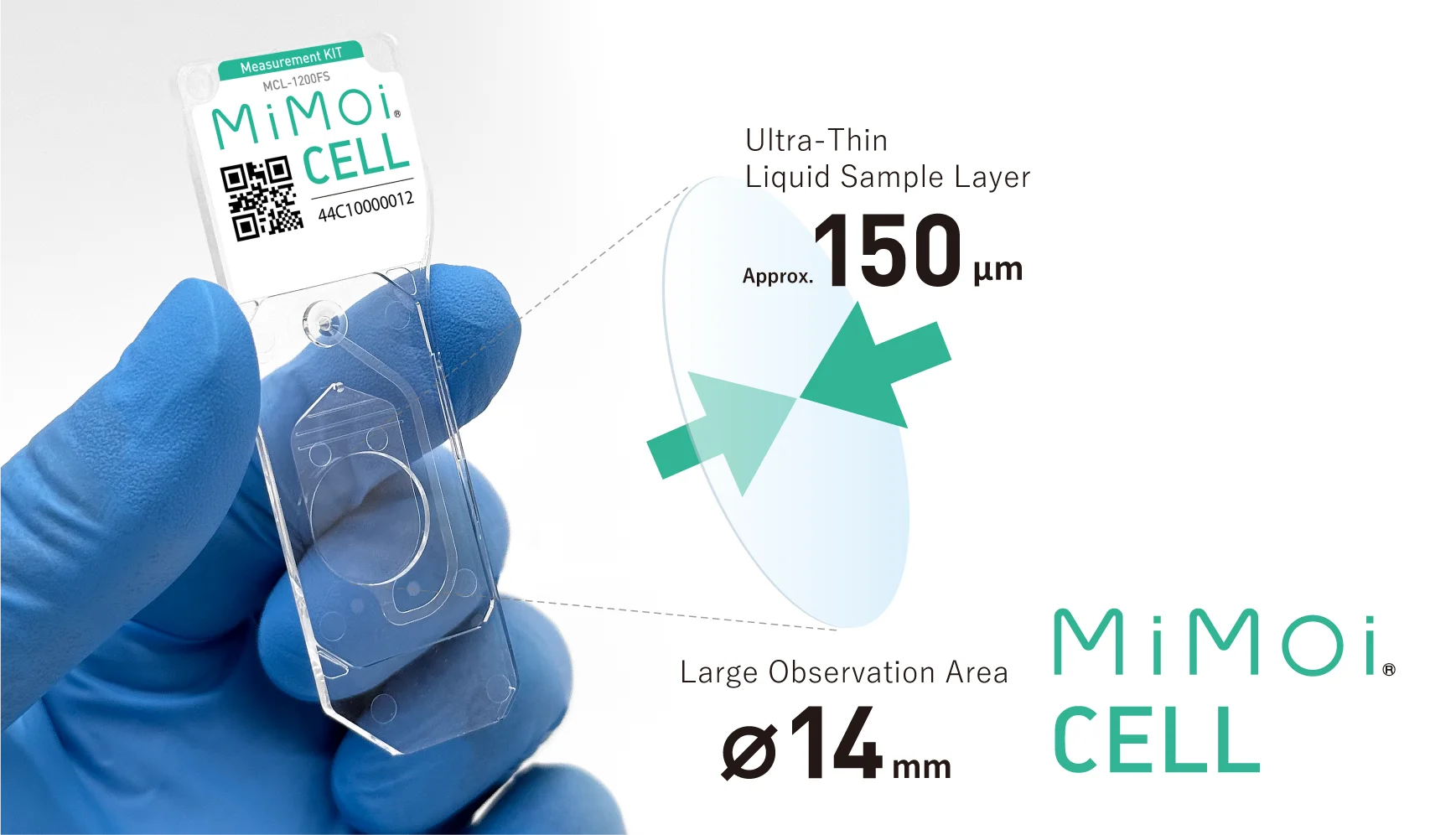
MiMoi CELL is a disposable cell made of COP (cyclic olefin polymer), developed to hold liquid samples in a thin, uniform layer. With a liquid layer of approximately 150 μm and a wide observation area approximately 14 mm in diameter, it provides a stable, wide field of view for observing small-volume liquid samples.
COP offers excellent transparency, low autofluorescence, and low adsorption. MiMoi CELL is designed for a wide range of applications, from research and development to quality control, including observation of a liquid's appearance, dispersion, crystals, turbidity, and behavior, as well as imaging and spectroscopic analysis. Because the cell does not need to be cleaned after use, it helps prevent sample carryover and variation caused by differences in cleaning conditions, supporting standardized observation workflows.
Three Key Benefits of MiMoi CELL
Wide Observation Area
The approximately 14 mm diameter observation area captures the condition of a liquid sample across a broad field, making it possible to inspect appearance, dispersion, crystals, and turbidity over a larger area—not just at a single point.
Uniform Thin Layer
Precision molding forms a thin liquid layer approximately 150 μm thick. A stable optical path length supports comparative observation and imaging, as well as other evaluations that require quantitative consistency.
Disposable Design—No Cleaning Required
Replace the cell after use to reduce cleaning steps. When handling different samples in succession, the disposable design also helps reduce the risk of contamination and shorten processing time.
COP Combines Optical Clarity with Ease of Use
Clear observation of liquid samples with reduced background noise
The cell is made of COP (cyclic olefin polymer). Its high optical transmittance and low autofluorescence help reduce cell-derived background noise during observation. COP also has low-adsorption properties that help limit nonspecific adsorption of proteins and particles.
COP offers good resistance to alcohols, acids, and alkalis, making the cell suitable for a wide range of liquid samples. It is manufactured without mold-release agents to minimize potential effects on the sample being observed.
Please confirm compatibility between your sample and the cell material before use.
Choose an Injection Method for Your Sample, From Low to High Viscosity
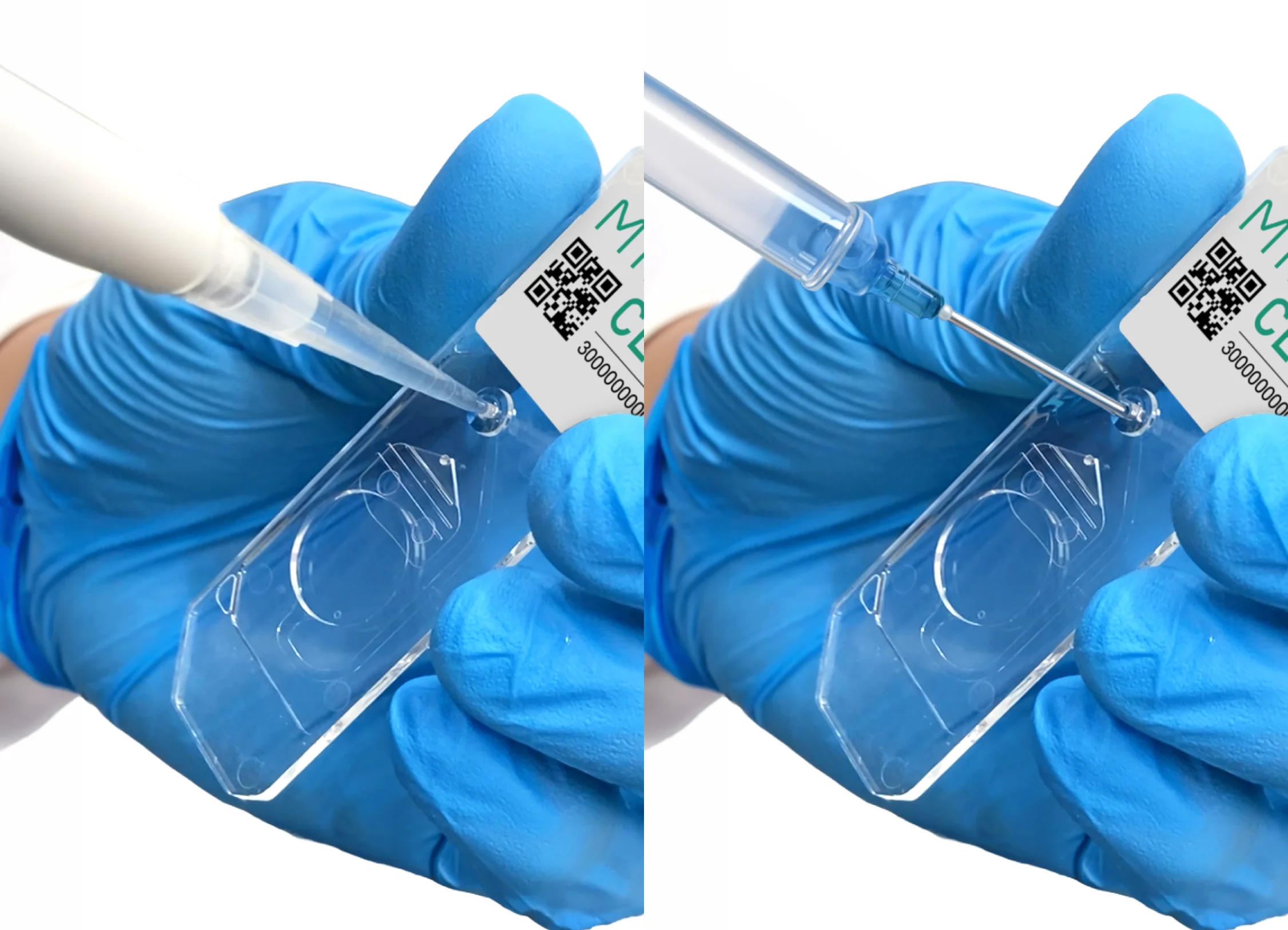
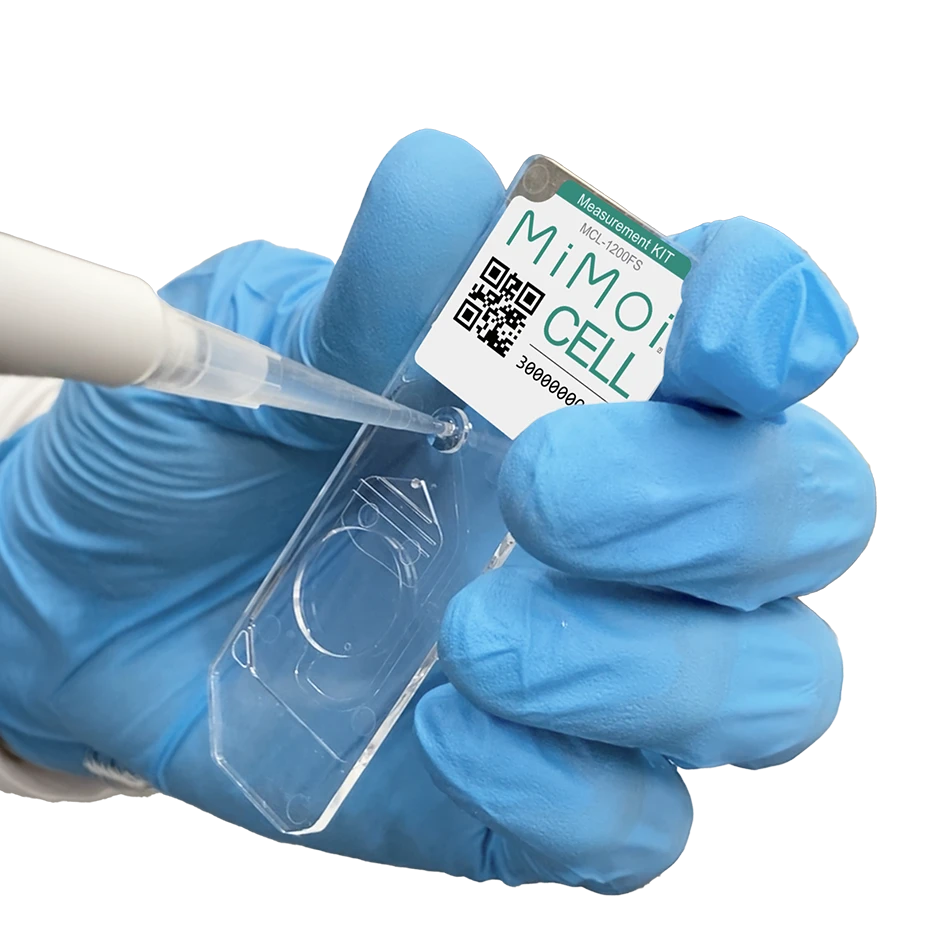
Most liquid samples can be dispensed easily with a micropipette. For highly viscous liquids, a syringe and needle can also be used, allowing you to choose an injection method to suit the sample's viscosity and your working conditions.
Only approximately 50 μL of sample is required. The cell makes efficient use of small sample volumes while spreading the liquid across a wide observation area. It is also suitable for research samples available only in limited quantities and for material evaluation during prototyping.
Simple Steps to Observation
1. Collect Collect approximately 50 μL of liquid sample.
2. Dispense Dispense the sample into MiMoi CELL through the inlet.
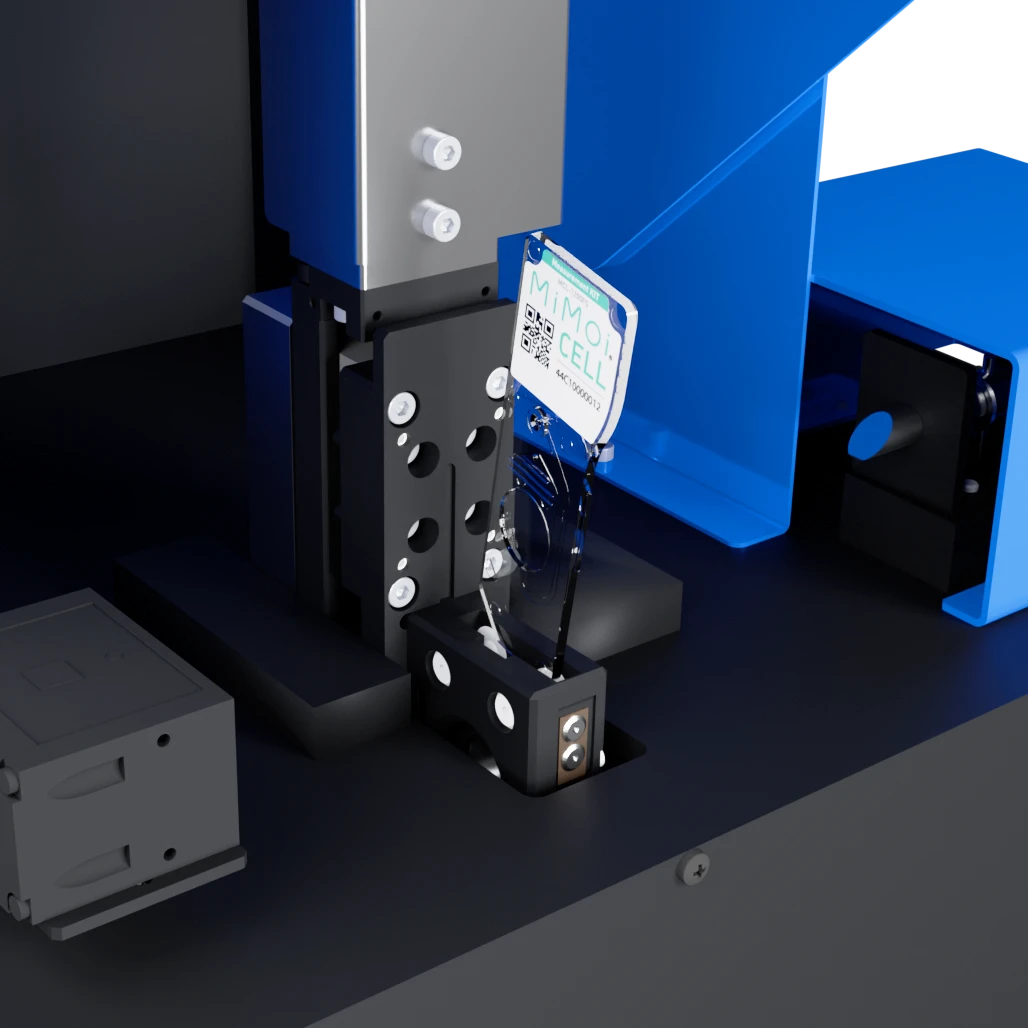
3. Observe Observe, image, or analyze the sample through the observation window.
From Research and Development to Quality Control
Consistent viewing conditions make liquid samples easier to compare
By standardizing the liquid layer thickness and observation area, MiMoi CELL helps create observation conditions that make samples easier to compare—even when operators or measurement dates differ. It can be used not only to investigate phenomena during research, but also for ongoing evaluations such as manufacturing condition studies, incoming inspection, in-process inspection, and pre-shipment checks.
Inspecting the appearance, color, and turbidity of liquids
Observing the dispersion of particles, pigments, fillers, and other materials
Observing crystallization, aggregation, sedimentation, bubbles, and other behavior
Imaging and image analysis with microscopes and cameras
Spectroscopic analysis, including transmission measurements
Comparative evaluation for research and development, process studies, and quality control
Basic Specifications
Product Name
MiMoi CELL
Applications
Liquid sample observation, imaging, and spectroscopic analysis, including appearance, dispersion, crystals, turbidity, and behavior
Material
COP (cyclic olefin polymer); non-sterile; manufactured without mold-release agents
Transparency / Optical Properties
High transmittance and low autofluorescence, inherent to COP
Adsorption
Low adsorption; helps limit nonspecific adsorption of proteins and particles
Store at room temperature. Avoid extreme heat or cold.
Product Lineup
Three grades are available, each offering different levels of liquid layer thickness control and calibration data to meet your observation and evaluation needs. Choose the grade that suits your application, from routine observation to evaluations requiring greater quantitative accuracy.
Standard
Premium
Premium Plus
Liquid Layer Thickness Variation
±5 μm
±3 μm
±1 μm
In-Plane Liquid Layer Uniformity
—
≤6 μm
≤3 μm
Calibration Data
None
Liquid layer thickness
Liquid layer and COP plate thickness
Intended Applications
Visual inspection and routine evaluation
Comparative evaluation, imaging, and analysis
High-precision comparative and quantitative evaluation
Liquid layer thickness variation: Difference in the average thickness among individual cells in the same package. In-plane liquid layer uniformity: Difference between the maximum and minimum measurements at nine points—the center and eight surrounding points—on each cell. For the applicable measurement ranges and detailed conditions, please refer to the official product specifications.
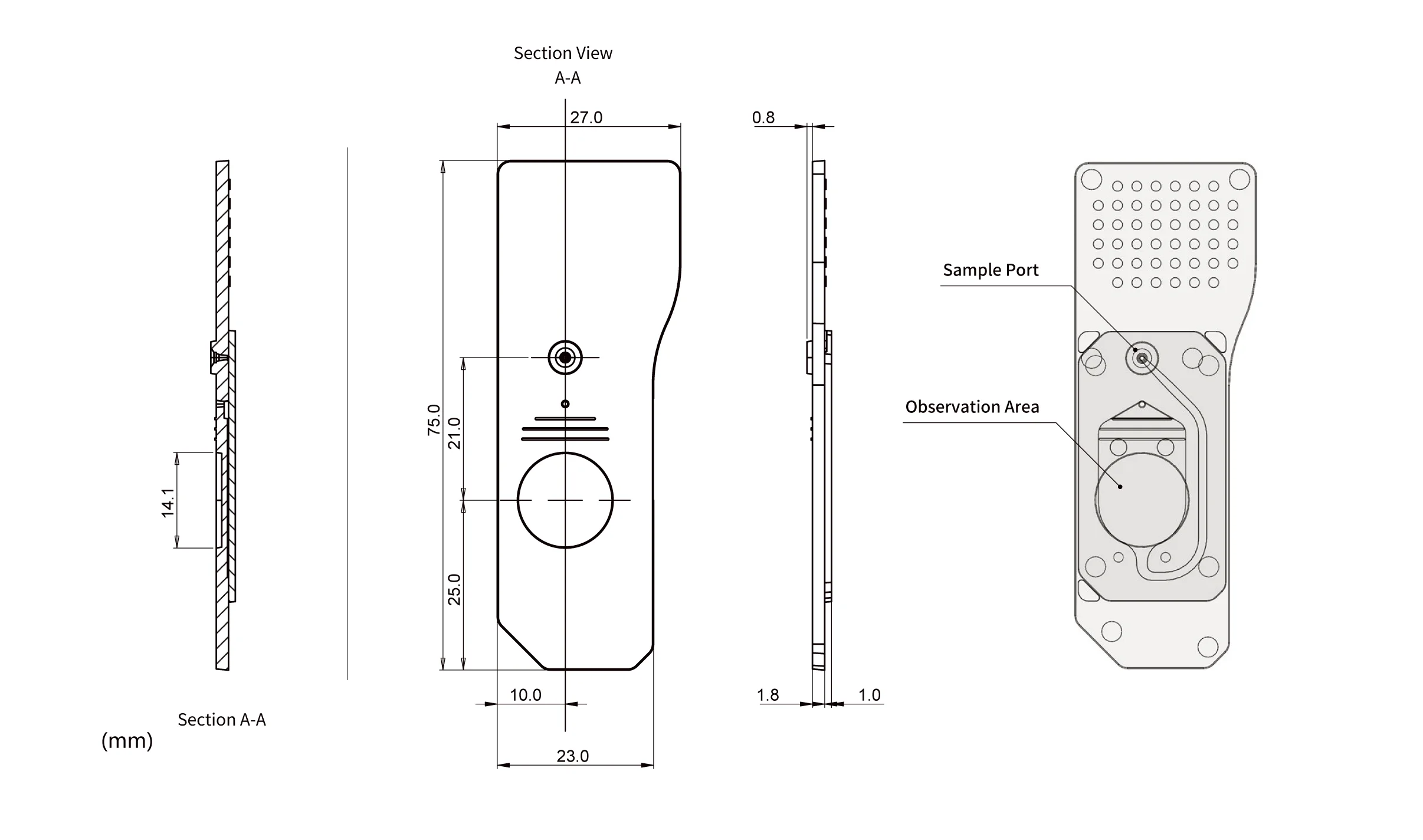
Dimensions and Structure
Evaluation Samples and Compatibility Checks
The recommended injection method and grade depend on sample viscosity and chemical composition, as well as the observation or analysis equipment being used. Please contact us to discuss compatibility checks before adoption, observation methods, required precision, and evaluation samples.
Tell us about your application and sample conditions, and we will advise you on selecting MiMoi CELL and planning your evaluation.